Unlock new opportunities by upskilling and stepping into a brighter future. Explore Now!!
ProGuide
Home / Training Courses

About Training Courses — 2026 Workshop Series

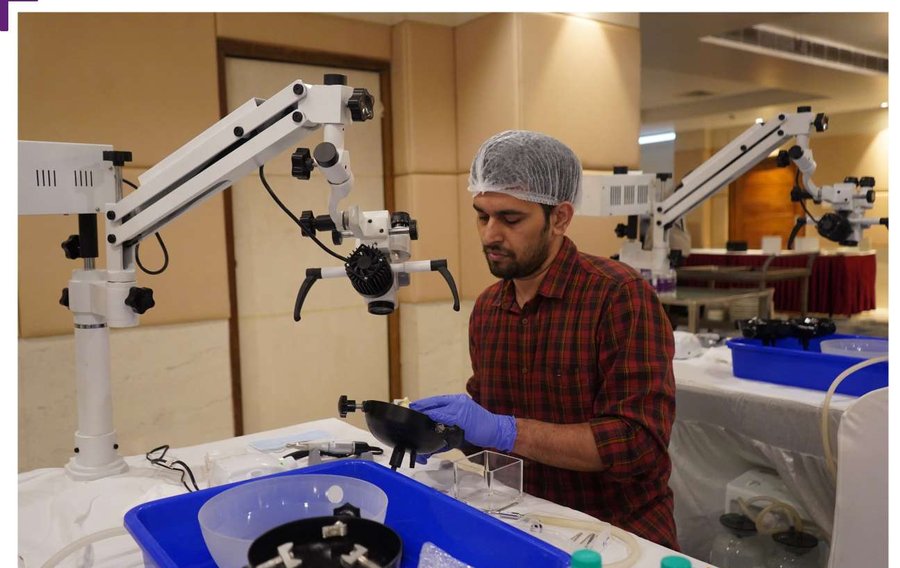
We are dedicated to building surgical confidence and reducing complications through specialized presurgical training. Our workshops provide hands-on training on simulation models of the temporal bone, paranasal sinuses and larynx, designed specifically for practicing surgeons. Each session is led by esteemed faculty members who provide one-to-one guidance.

Course Directors
Dr. Milind Kirtane

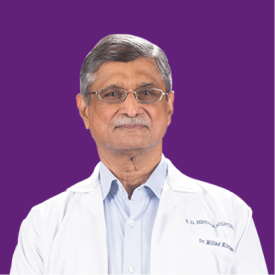
Dr. Milind Kirtane

MS, DORL, DSc (Hon.) — Padma Shri Awardee

One of India's foremost ENT and cochlear implant surgeons. Consulting ENT Surgeon at P. D. Hinduja National Hospital, Breach Candy and Saifee Hospital, Mumbai, and Honorary Surgeon at King Edward Memorial Hospital. A teacher to generations of otolaryngologists, his guidance anchors the clinical standards of every ProGuide training programme.
Dr. Prashant Naik

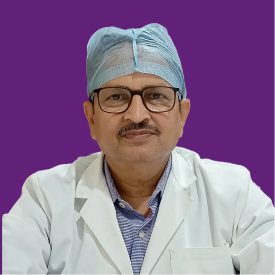
Dr. Prashant Naik

MS (ENT), DLO

Dr. Prashant's dedication to the field of otology is commendable. His innovative approach — including the creation of a precise 3D-printed replica of the temporal bone — showcases his commitment to advancing medical education and practice. He is an active member of the AAO-HNSF and the Politzer Society and a peer reviewer for the Otolaryngology–Head and Neck Surgery journal. His hands-on dissection workshops, coupled with his management of an open-access temporal bone dissection lab, offer invaluable resources for both aspiring and established otologists.

3D Surgical Simulation Workshops — 2026 Series

A comprehensive series of one-day, faculty-led, hands-on programs built on anatomically accurate 3D simulation models. Each workshop pairs live demonstration of every procedural step with supervised practice at fully equipped workstations — with one-to-one mentoring, continuous faculty feedback and participation certificates.

Otology · Foundation

Basic 3D Temporal Bone Dissection Workshop

Temporal bone anatomy is highly complex and compact Safe otologic surgery requires precise 3-D anatomical orientation Cadaveric dissection before live surgery improves safety and confidence Simulation-based training provides reproducible learning
Procedures covered
  • Bone model with accurate external and internal anatomical details including:
  • Mastoid air cells
  • Middle ear cleft
  • Facial nerve canal
  • Cochlea & semicircular canals
One-day hands-on · Operating microscope, high-speed microdrill, suction-irrigation, full dissection set per workstation
Otology · Advanced

Advanced Temporal Bone Dissection Workshop

Mastery of basic mastoid surgery is the foundation for advanced procedures Temporal bone surgery requires progressively structured dissection training Advanced skills are built through guided, hands-on practice
Procedures covered
  • Artificial temporal bone model with real-size inner ear
  • Complete facial nerve, internal acoustic canal
  • Sigmoid sinus, and dura
One-day hands-on · Microear instrument sets per workstation
Rhinology

Paranasal Sinuses Workshop

Paranasal sinus anatomy shows wide anatomical variation Endoscopic sinus surgery demands strong three-dimensional orientation Accurate spatial understanding is critical for safe surgical navigation
Procedures covered
  • Artificial paranasal sinus model with septum
  • Turbinates, uncinate process, bulla ethmoidalis
  • Sinuses with ostia, and soft tissue mucosa
One-day hands-on · Endoscopes, endoscopic instruments, monitor tower
Neurotology

Facial Nerve Workshop

The facial nerve follows a complex and intricate path through the temporal bone Facial nerve surgery therefore demands exceptional precision and control Developing these skills requires meticulous and systematic dissection training Anatomically accurate cadaveric bone replicas provide the ideal learning platform
Procedures covered
    One-day hands-on · Diamond burrs, nerve graft pieces, nerve suturing materials
    Otology

    Tympanoplasty Workshop

    Tympanoplasty demands high surgical precision to avoid complications and failure Skill development requires structured, hands-on surgical practice Practical training significantly improves outcomes and success rates
    Procedures covered
    • Artificial temporal bone model with tympanic membrane
    • Having moderate central perforation
    • Some models with absent or eroded incus
    One-day hands-on · Microear instruments, artificial grafts, gelfoam, grommets
    Otology · Implant

    Cochlear Implant Surgery Workshop

    Cochlear implant surgery requires thorough anatomical understanding Precise surgical technique Atraumatic electrode insertion
    Procedures covered
    • Artificial temporal bone model with mastoid air cells
    • Facial recess, round window niche
    • Cochlea, and facial nerve pathway
    One-day hands-on · Dummy electrodes, microdrill with cutting & diamond burrs
    Rhinology · Interventional

    Balloon Sinuplasty & Eustachian Tube Dilatation Workshop

    Balloon-based sinus and Eustachian tube procedures demand high precision Clear anatomical orientation is essential for safe and effective intervention Hands-on training is critical to achieve procedural mastery
    Procedures covered
    • Balloon sinuplasty of frontal sinuses
    • Balloon sinuplasty of maxillary sinuses
    • Eustachian tube dilatation
    Single-day hands-on with didactic lectures and video demonstrations · Balloon catheter instruments, nasal endoscopes
    Laryngology

    Larynx Workshop

    Laser technology has revolutionized modern laryngeal surgery These procedures now demand high levels of precision and control Refined motor skills are essential for safe day-care surgical outcomes
    Procedures covered
    • Vocal cord nodule excision
    • Partial cordectomy
    • Laryngeal web excision
    One-day hands-on · Endoscopic instruments, laser machines, monitor tower

    Why Artificial Bone

    Why Artificial Bone
    • Essential Skills for Surgical ProceduresMastering the anatomy of the temporal bone, larynx and paranasal sinuses is crucial before performing surgical procedures.
    • The Need for 3D Simulation ModelsWhile cadaveric dissection is ideal, it is often unavailable. Realistic 3D models provide a superior alternative.
    • Highly Detailed Temporal Bone ModelPractice mastoid surgeries, facial nerve decompression and cochlear implant insertion.
    • Accurate 3D Paranasal Sinus ModelOver 90% anatomical accuracy with detailed sinus structures and soft tissue.
    100%
    Safety in temporal bone laboratory
    90%
    Value for surgical experience
    94%
    External anatomical features
    85%
    Internal anatomical features
    92%
    Drill response vs cadaver temporal bone